The tile industry is experiencing a dramatic shift in 2026. Toronto and GTA homeowners are moving away from the ultra-minimalist, all-white aesthetic that dominated the past decade toward warmer, more textured, and deeply personal design choices. According to Yelp's 2026 trends report, searches for tile contractors surged 351%, reflecting a massive wave of homeowners investing in custom tile work.
Here are the most impactful tile trends shaping Toronto homes right now, backed by industry data and design authority insights from sources including House Beautiful, Better Homes & Gardens, and the Coverings 2025 international tile exposition.
1. Textured and Dimensional Wall Tiles
Three-dimensional tiles with sculpted surfaces, subtle waves, and linear ridges have become the single most requested feature in Toronto bathroom renovations. These tiles interact with both natural and artificial light, creating dynamic shadow patterns that change throughout the day.
Fluted tiles, pleated surfaces, and raised geometric patterns are replacing flat subway tiles as the go-to wall treatment. The textural quality adds depth and sophistication without requiring bold colour choices, making them versatile across modern, transitional, and contemporary interiors.
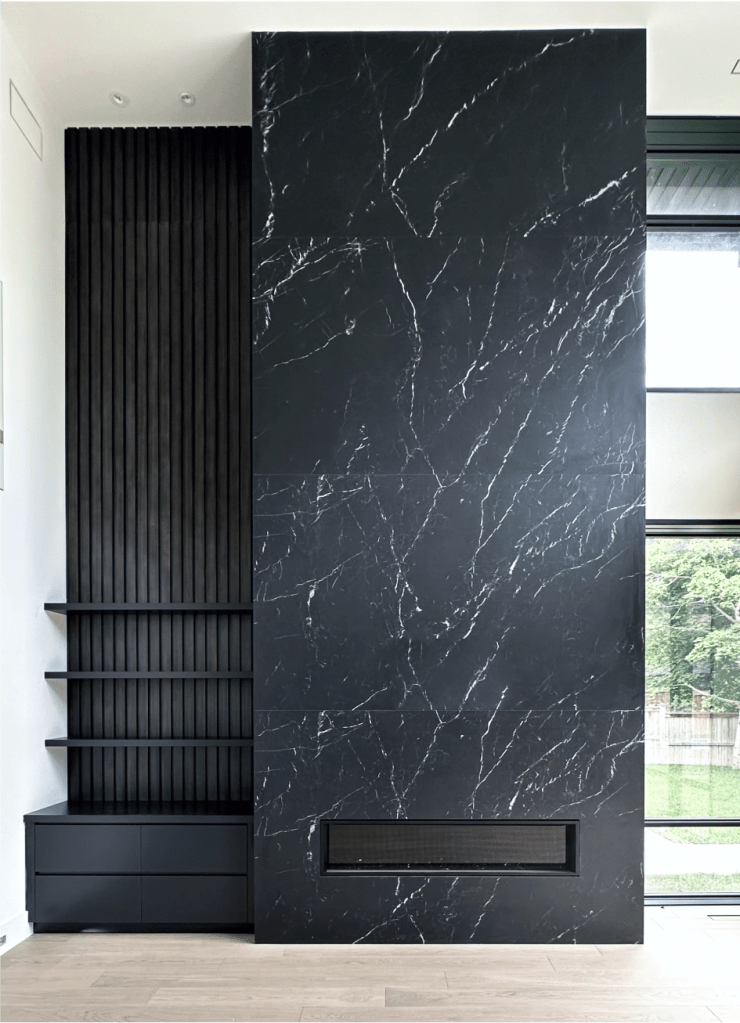
**Where Toronto homeowners are using them:** Primary bathroom feature walls, kitchen range hood surrounds, fireplace mantels, and powder room accent walls.
2. Zellige and Handcrafted Ceramics
Zellige tiles, the hand-cut Moroccan ceramics known for their irregular edges and rich glaze variations, have moved from niche artisanal status to mainstream demand. Each tile is individually shaped and glazed, creating surfaces with extraordinary depth and character that mass-produced tiles simply cannot replicate.
The appeal lies in imperfection. Unlike precision-cut rectified tiles, zellige celebrates the human hand in its creation. The glaze pools unevenly, the edges vary slightly, and the colour shifts from tile to tile. This creates a living, breathing surface that reflects light differently from every angle.
**Installation considerations:** Zellige requires an experienced installer. Tiles must be mixed from all boxes before installation to ensure even shade distribution. White polymer-modified thin-set is mandatory because the translucent glaze can reveal dark mortar beneath. Expect to order 15–20% overage to account for natural variations and cuts.
3. Earthy Tones and Nature-Inspired Palettes
The crisp whites and cool greys that defined Toronto bathrooms and kitchens for the past decade are giving way to warm, grounding earth tones. Think sandy beiges, clay terracotta, warm taupe, sage green, and soft mushroom browns. These colours connect interiors to the natural landscape and create spa-like environments that promote calm and wellness.
Forbes identifies earthy tones as a defining trend for 2026, noting that homeowners are gravitating toward materials and palettes that evoke a sense of grounding. In Toronto's fast-paced urban environment, these organic tones offer a visual counterbalance.
**Trending colour families:** - Sand and desert tones: Off-white, golden beige, warm camel - Clay and terracotta: Dusty burnt orange, sun-baked earth, warm rust - Forest and botanical: Deep forest green, sage, olive, moss - Stone and mineral: Warm grey, limestone buff, travertine honey
4. Tile Drenching
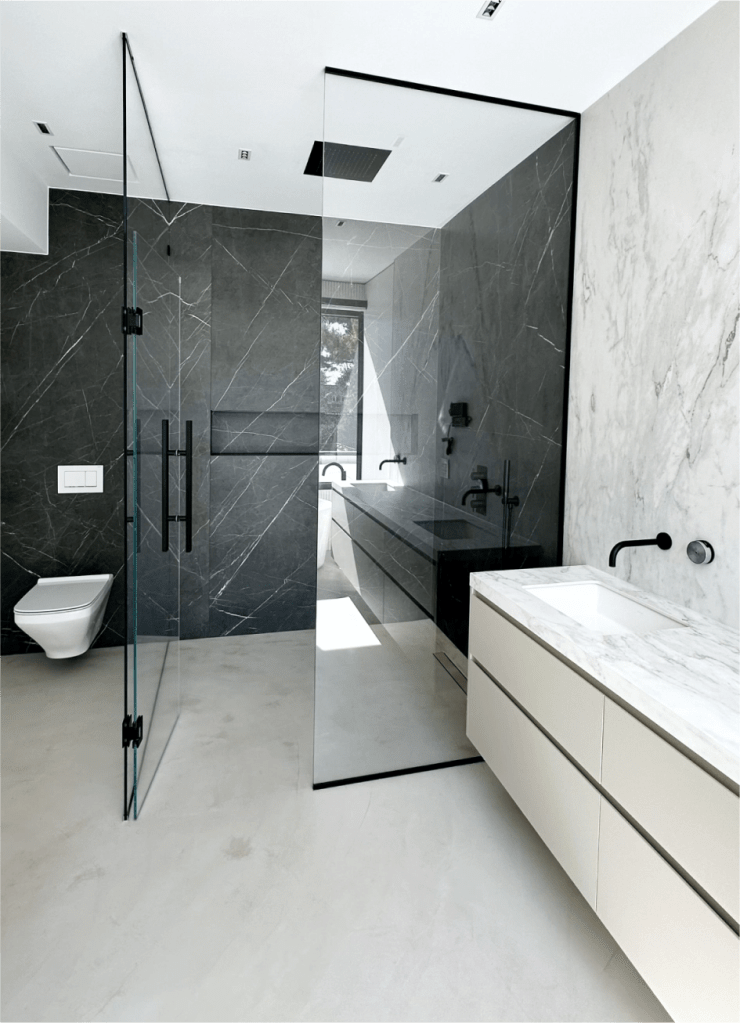
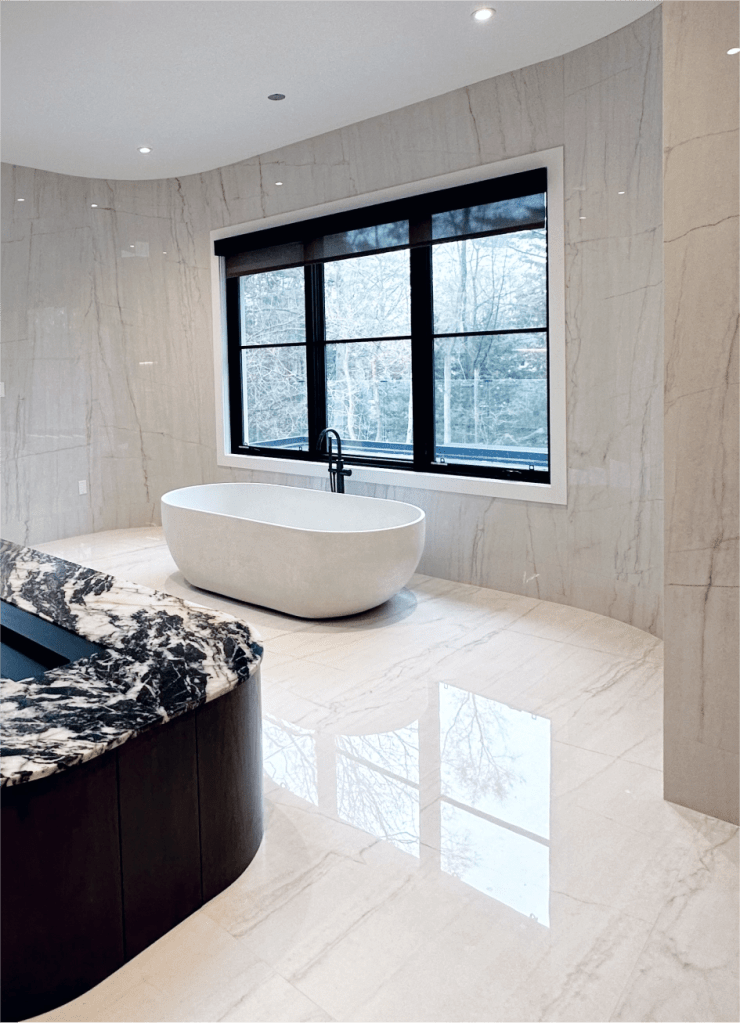
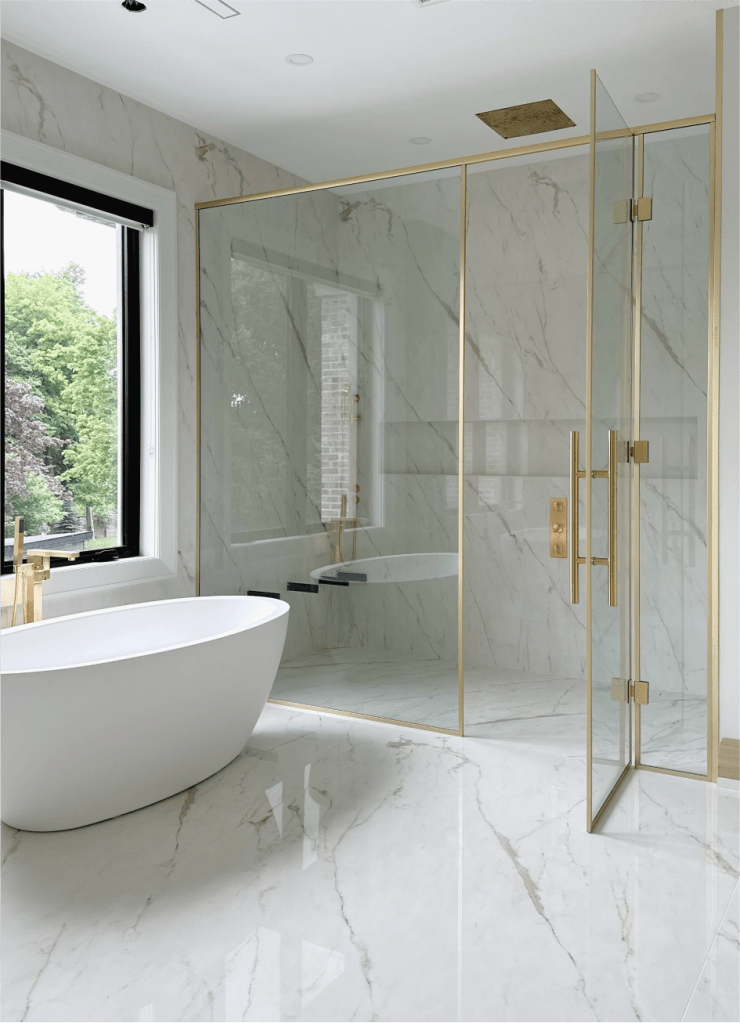
Tile drenching, the technique of covering floors, walls, and shower enclosures in the same continuous tile, has become the defining luxury treatment in Toronto bathroom design. By eliminating visual breaks between surfaces, drenching creates an immersive, spa-like environment that makes bathrooms feel larger and more cohesive.
This approach works particularly well with large-format porcelain slabs and natural stone-effect tiles. The fewer grout lines and seamless transitions between floor and wall create a dramatic architectural statement. Living Etc. calls tile drenching one of the top bathroom trends of 2026 for its ability to transform ordinary bathrooms into sanctuary-like retreats.
**Best materials for drenching:** Large-format porcelain (24x48 or larger), gauged porcelain panels, marble-effect slabs, travertine-look tiles.
5. Bold Geometry and Creative Layouts
Tile layout is becoming as important as the tile itself. Toronto homeowners are embracing herringbone, chevron, basketweave, and custom geometric patterns that add movement and personality to floors and walls. The trend extends beyond simple pattern changes to include mixed tones, alternating matte and gloss finishes, and intentional asymmetry.
Checkerboard patterns are experiencing a major comeback, with Houzz reporting that searches for bathroom checkerboard more than doubled in 2025. Modern interpretations favour softer tonal contrasts like cream and sage rather than stark black and white, creating a sophisticated vintage look that feels fresh rather than retro.
**Layout trends to watch:** - Herringbone in wood-look porcelain for kitchen floors - Vertical stack bond for modern shower walls - Chevron patterns in entryways and mudrooms - Custom geometric mixes for powder room floors
6. Matte Finishes with Glazed Accents
Pure matte tiles dominated the early 2020s, but 2026 brings a more nuanced approach. Hand-glazed tiles with subtle surface variation are making a strong comeback, not with the mirror-like polish of the 2010s, but with a soft, organic lustre that responds to light. The combination of matte field tiles with strategically placed glazed accent pieces creates visual richness and depth.
This trend connects to the broader movement toward handcrafted aesthetics and surfaces that feel authentic rather than manufactured. Expect to see more kitchen backsplashes mixing matte base tiles with glossy trim pieces, and bathroom walls combining matte large-format tiles with glazed mosaic niches.
7. Stone-Effect Porcelain: Onyx and Travertine
While marble-look porcelain has been a staple for years, 2026 introduces two new stone effects to Toronto homes. Onyx-effect porcelain tiles offer dramatic veining and depth, with translucent qualities that interact with light in ways that standard marble-look tiles cannot match. Travertine-look tiles bring warm, earthy texture with natural-looking pits and filled surfaces that reference the timeless material used in Roman architecture.
Living Etc. identifies onyx-effect porcelain as an emerging luxury trend, while travertine-look tiles align with the broader shift toward warm, organic materials.
8. Sustainable and Eco-Conscious Tile Choices
Sustainability has moved from a nice-to-have to a purchasing decision factor for Toronto homeowners. The tile industry has responded with recycled-content porcelain, locally manufactured products that reduce transportation emissions, and production processes that minimize water and energy consumption.
Ceramic tile is inherently sustainable: it is made from natural raw materials, is VOC-free, does not harbour allergens or odours, and has a lifespan measured in decades rather than years. For environmentally conscious Toronto homeowners, tile's longevity means less frequent replacement and less material entering landfills compared to shorter-lived alternatives.
9. Micro Moments: Small Theatrical Tile Features
Not every homeowner wants full tile drenching. The counter-trend in 2026 involves using bold, characterful tiles in concentrated moments: a tiled niche in the shower, a patterned floor in a powder room, or an artisan backsplash behind a bathroom vanity. These small theatrical installations create maximum visual impact with minimal material investment.
This approach is particularly popular in Toronto condos where space and budgets may be more constrained. A single wall of handmade zellige or a mosaic-lined shower niche can transform an ordinary bathroom into a memorable space.
10. Wood-Look Tile in Wider Formats
Wood-look porcelain continues to grow in popularity, but 2026 brings wider planks (up to 12 inches) and longer lengths (up to 48 inches) that more convincingly replicate natural hardwood. Improved digital printing technology means more realistic grain patterns, knot details, and colour variation.
For Toronto homeowners, wood-look tile solves the perennial challenge of wanting hardwood aesthetics in moisture-prone areas. Kitchens, bathrooms, basements, and mudrooms can all feature wood-look tile that extends the visual flow from genuine hardwood in adjacent spaces.
How to Incorporate 2026 Trends in Your Toronto Home
The best approach is to blend trending elements with timeless fundamentals. Use earthy, neutral tones as your foundation and introduce textural interest through dimensional wall tiles or handcrafted zellige in accent areas. Choose large-format porcelain for floors to create clean, spacious surfaces, and add personality through layout patterns like herringbone or chevron.
Contact Prime Tiling to bring these 2026 tile trends to life in your Toronto, Mississauga, Brampton, Vaughan, Markham, or Oakville home. Our design consultation helps you select the perfect combination of materials, colours, and patterns for lasting style.