Canada's population is aging rapidly. Statistics Canada projects that by 2030, over 20% of Canadians will be 65 or older. In the Greater Toronto Area, this demographic shift is driving a surge in home modifications designed to allow residents to remain safely in their homes as mobility and balance change with age.
The bathroom is the most dangerous room in any home. The combination of hard surfaces, water, and the physical demands of bathing and toileting creates a high-risk environment for slips, falls, and injuries. According to the Public Health Agency of Canada, falls are the leading cause of injury-related hospitalizations among seniors, and bathrooms are the most common location for falls in the home.
Thoughtful tile selection and installation is the foundation of an accessible, age-friendly bathroom. This guide covers the essential considerations for Toronto homeowners planning bathroom renovations with accessibility and aging in place in mind.
Slip-Resistant Tile Selection
#Understanding Slip Resistance Ratings
The single most important tile specification for accessible bathrooms is slip resistance. Two measurement systems are commonly referenced:
**DCOF (Dynamic Coefficient of Friction):** The North American standard (ANSI A326.3). A DCOF of 0.42 or higher is required for level interior wet surfaces. For accessible bathrooms, targeting 0.50 or higher provides an extra margin of safety.
**R-Rating (DIN 51130):** The European classification system, commonly seen on imported tiles. R9 is the minimum for dry interiors, R10 for wet rooms, and R11 or R12 for barefoot wet areas like showers.
#Best Tile Surfaces for Accessibility
- **Matte-finish porcelain:** Provides excellent wet traction. Available in a wide range of styles without sacrificing aesthetics.
- **Textured porcelain:** Tiles with subtle raised patterns or dimpled surfaces offer enhanced grip. Modern textured tiles achieve high slip resistance while remaining comfortable underfoot.
- **Small-format mosaic tile:** The high grout-to-tile ratio creates natural traction. 1x1 or 2x2 inch mosaics on mesh backing are the standard for accessible shower floors.
- **Natural slate:** Naturally textured cleft surface provides excellent grip. Best suited for bathroom floors outside the shower.
#Surfaces to Avoid
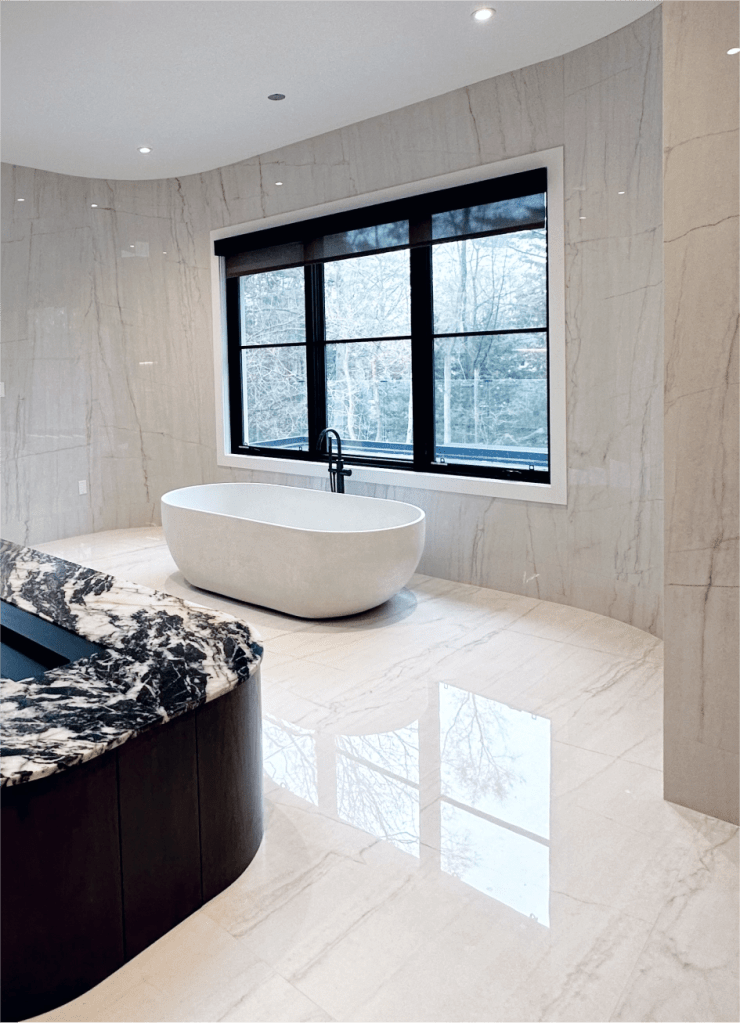
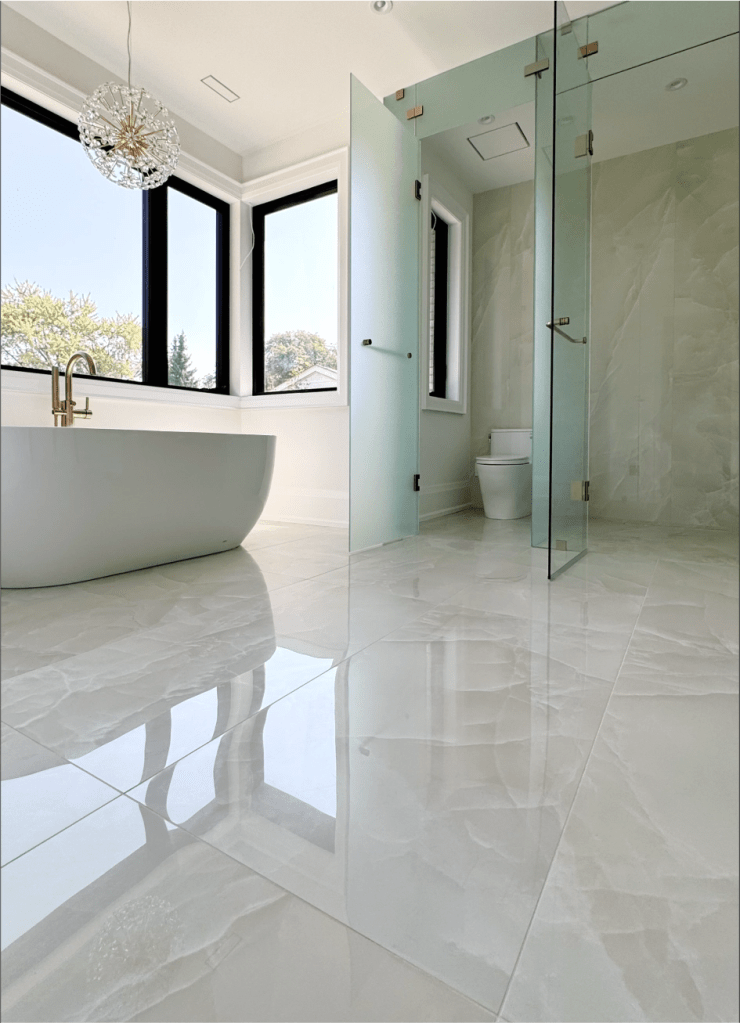
- **Polished porcelain or marble:** Extremely slippery when wet, even with a slight film of moisture from steam.
- **Large-format tiles on shower floors:** Cannot conform to the drainage slope, creating standing water.
- **Glazed tiles with smooth finishes:** The glaze creates a slick surface when wet.
Barrier-Free (Curbless) Shower Design
The barrier-free shower is the cornerstone of accessible bathroom design. Eliminating the curb that steps into a traditional shower removes a tripping hazard and allows wheelchair or walker access.
#Tile Requirements for Barrier-Free Showers
**Floor slope:** The shower floor must slope toward the drain at a minimum of 2% (1/4 inch per foot) to prevent water from flowing into the bathroom. This slope must be consistent and gradual, without sudden changes that could cause instability.
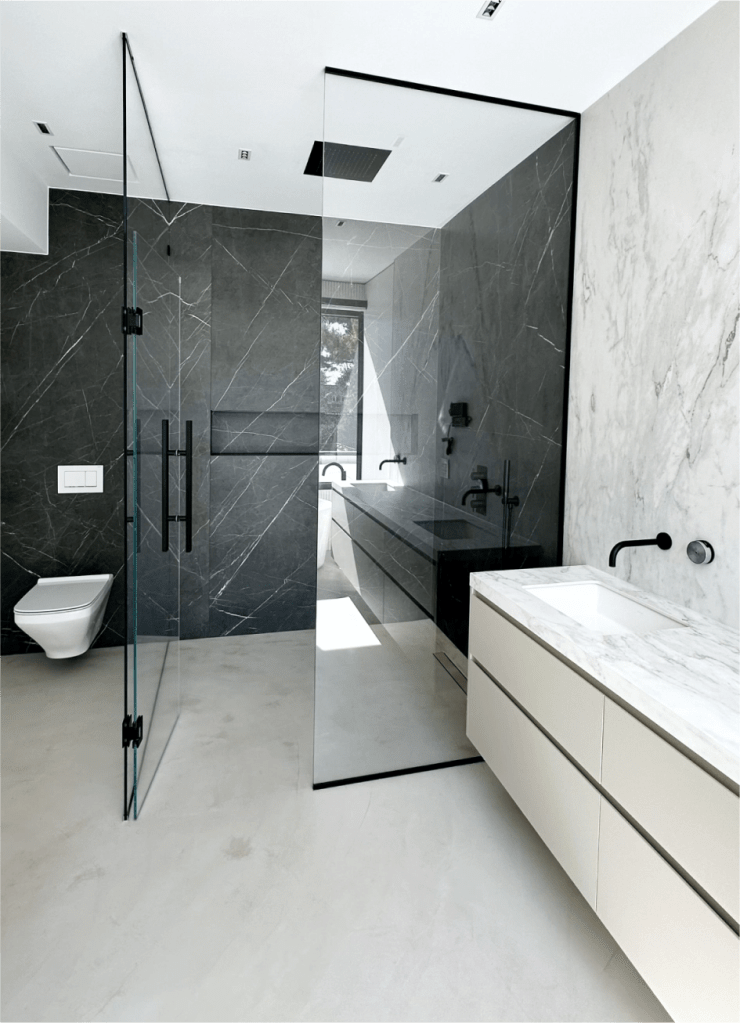
**Linear drains:** Linear (trench) drains along one wall allow the entire shower floor to slope in a single direction rather than toward a centre drain point. This creates a more gradual, predictable surface for walking and wheelchair use.
**Tile sizing:** Use small-format tiles (2x2 inch or smaller) on the shower floor. These tiles conform to the drainage slope without requiring excessive lippage (height differences between tiles) that creates trip hazards with large-format tiles.
**Transition tile:** The transition between the bathroom floor and the shower floor must be flush. This requires careful subfloor preparation to create a smooth, level transition without any lip or step.
#Waterproofing for Barrier-Free Showers
Barrier-free showers demand exceptional waterproofing because there is no curb to contain water. A bonded waterproofing membrane system (such as Schluter KERDI with a KERDI-LINE linear drain) creates a fully waterproof shower assembly that integrates seamlessly with the bathroom floor.
Grab Bar Integration and Tile Reinforcement
#Planning for Grab Bars During Tile Installation
Grab bars are essential safety features in accessible bathrooms. They must be anchored to structural framing or solid blocking behind the tile, not just into drywall. The time to install this reinforcement is during the tile renovation, not after.
**Recommended grab bar locations:** - Beside the toilet (one or both sides) - Inside the shower, both horizontal and vertical - At the shower entry point - Beside the bathtub (if retained)
#Blocking Installation
Install solid wood blocking (3/4-inch plywood or 2x6 lumber) between wall studs at grab bar locations before installing backer board and tile. This blocking provides a solid anchor for grab bars rated to support 250 pounds or more.
**Pro tip:** Install blocking across the entire wet wall of the shower from 30 to 50 inches above the floor. This allows grab bars to be installed at any location without knowing the exact position in advance, accommodating changing needs over time.
Tile Layout for Wheelchair Accessibility
#Floor Clearances
For wheelchair-accessible bathrooms, the Ontario Building Code requires: - **Minimum 1,500mm (60-inch) turning radius** in the bathroom - **Clear floor space** of 800mm x 1,300mm (32 x 51 inches) beside the toilet - **Doorway width** of minimum 810mm (32 inches) clear
#Floor Tile Considerations
- **Minimal grout joints:** Wide grout lines create bumpy surfaces that impede wheelchair movement. Use rectified tiles with 1/16-inch grout joints for the smoothest possible surface.
- **Large-format tiles:** Fewer grout lines mean a smoother surface for wheelchair wheels. 24x24 or 12x24 porcelain tiles are ideal for bathroom floors (excluding shower floors, which need small-format tiles).
- **Flush transitions:** The transition between the bathroom tile and adjacent flooring (hallway carpet or hardwood) must be flush or use a low-profile transition strip that does not impede wheelchair passage.
Comfort Height and Ergonomic Design
#Raised Toilet Platform
Some accessible bathrooms incorporate a slightly raised tile platform (1–2 inches) beneath the toilet to achieve a comfort-height seating position. This requires careful waterproofing and tile detailing around the platform edges.
#Recessed Tile Niches
Shower niches built into the wall at seated height (approximately 36 inches from the floor) allow seated bathers to reach shampoo and soap easily. Multiple niches at different heights accommodate both standing and seated use.
#Shower Bench Integration
A built-in tile bench in the shower provides a secure, permanent seating option. The bench surface should use the same slip-resistant tile as the shower floor. The bench must be waterproofed as part of the shower membrane system and structurally supported to hold at least 250 pounds.
Contrast and Visibility
For residents with reduced vision, tile colour contrast helps identify different surfaces and transitions:
- **Use contrasting tile colours** at the shower entry to clearly mark the transition from dry floor to wet floor
- **Contrasting tile or trim** at the front edge of shower benches and steps
- **Avoid all-white bathrooms** that make it difficult to distinguish between floor, walls, and fixtures
- **Matte finishes** reduce glare that can impair vision, especially for residents with cataracts or other age-related eye conditions
Cost of Accessible Bathroom Tile Renovation in Toronto
| Component | Cost Range | |---|---| | Slip-resistant porcelain tile (material) | $8 – $20 per sq ft | | Barrier-free shower construction (including linear drain) | $3,000 – $6,000 | | Waterproofing membrane system | $800 – $2,000 | | Grab bar blocking and installation | $500 – $1,500 | | Tile bench construction | $800 – $2,000 | | Professional installation labour | $8 – $16 per sq ft | | **Total accessible bathroom renovation** | **$15,000 – $35,000** |
#Funding and Tax Benefits
Ontario homeowners may be eligible for financial assistance: - **Ontario Seniors' Home Safety Tax Credit:** Provides a 25% tax credit on up to $10,000 of eligible home modification expenses. - **Canada Mortgage and Housing Corporation (CMHC) grants:** Various programs support accessibility modifications for seniors and people with disabilities.
Contact Prime Tiling for expert accessible bathroom tile installation across Toronto, Mississauga, Vaughan, Markham, Brampton, Oakville, and the entire GTA. We design and install bathrooms that are beautiful, functional, and safe for residents of all ages and abilities.